Mnemonic Devices: Types, Examples, and Why They Work
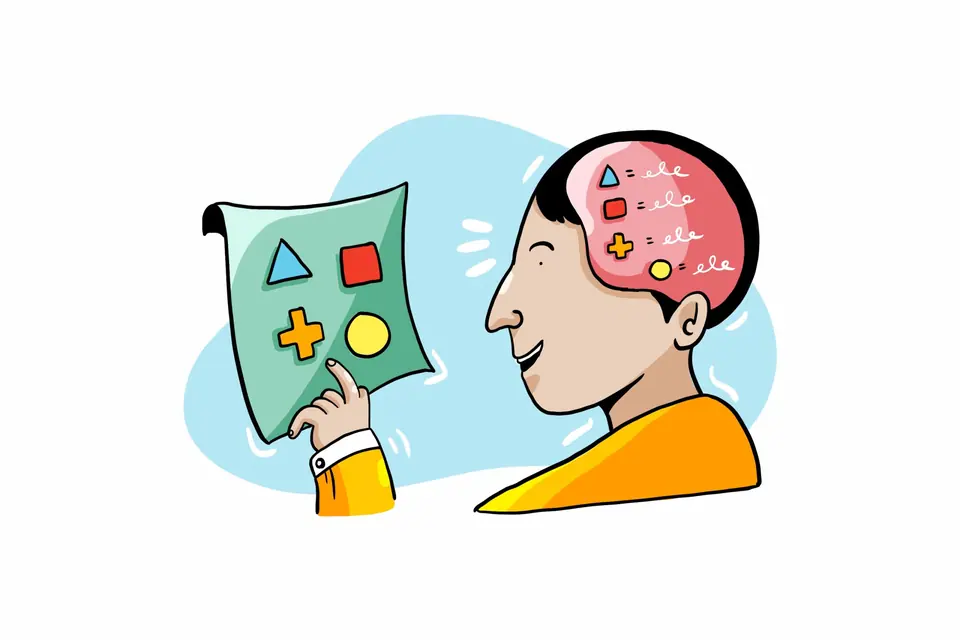
A mnemonic device is a memory aid that makes information easier to store and recall by linking it to something more memorable, such as an image, a rhyme, an acronym, or a familiar place. The main types are visual mnemonics, acronyms and acrostics, rhymes, chunking, and the method of loci.
The word comes from the Ancient Greek mnemonikos, meaning “of memory”, after Mnemosyne, the goddess of memory. At ImageThink, visual strategists build the visual kind in real time, turning a conversation into simple icons a room can remember and act on afterward.
Seeing is the first step toward doing. Visual mnemonics help high-performing teams remember more, align faster, and follow through after the meeting.
Sometimes, it can be difficult for new clients to understand why graphic recording and graphic facilitation is so effective. This article is part of an ongoing series, It’s a Visual World. In it, we explore everyday experiences that showcase the myriad ways our brains work more efficiently with visual input. Look for areas in your daily life for the visual iconography you rely on, then give us a call. Seeing is believing.
What Is a Mnemonic Device?
A mnemonic device is any technique that makes information easier to remember by attaching it to a cue your memory can find again. The cue does the work: an image, a word built from first letters, a rhythm, a rhyme, or a route through a familiar building.
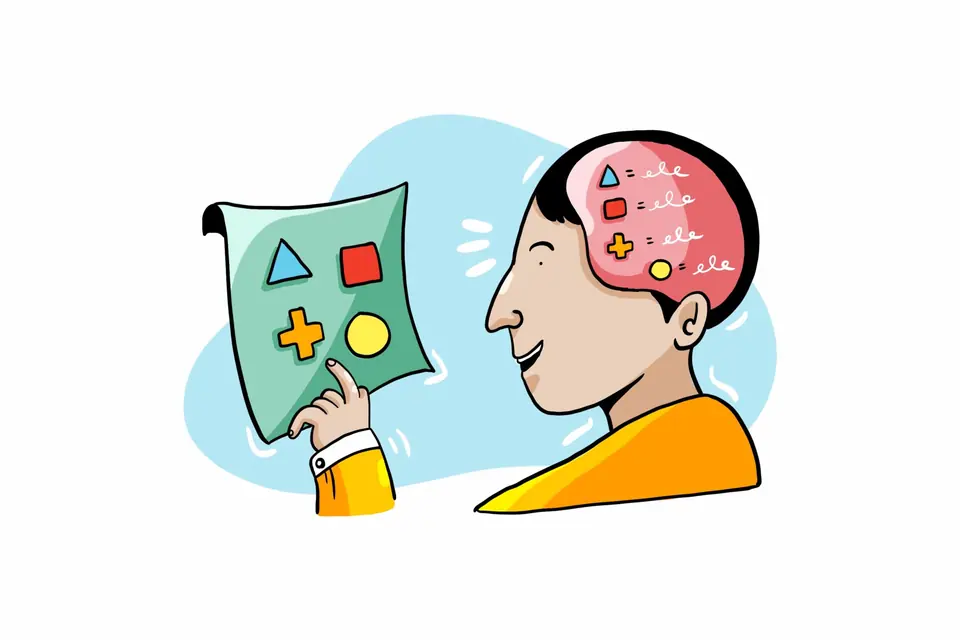
Mnemonics do not add capacity to memory. They reorganize information into a shape memory handles well, which is why a ten-digit number is hard to hold as ten digits and easy to hold as three groups. The same principle explains why a single icon can carry an idea that took a paragraph to explain.
The techniques are old. Greek and Roman orators memorized speeches by placing each idea in a room of an imagined building, then walking the route as they spoke. That method, the method of loci, is still one of the most reliable ways to recall a sequence in order.
What are Mnemonic Devices and Visual Mnemonics?
For starters, a mnemonic device is a memory aid, intended to assist in the retention and retrieval of information. Popular mnemonic devices include rhymes, poems, acronyms, songs, gestures, or, as you may have guessed, images.
Deriving from the Ancient Greek word mnemonikos, which means “of memory,” the word’s root comes from Mnemosyne, the Greek goddess of memory in mythology. The original system of Greek (and later Roman) mnemonics most popularly used imagined places, such as homes or buildings, in which every object, wall, window, and piece of furniture could be associated with information to be remembered.
What is the Purpose of Using a Mnemonic Device?
If this is ringing a certain pop-culture bell with any of you, yes, this is all very Benedict Cumberbatch’s Mind Palace from BBC’s Sherlock.Practitioners would often construct entire towns, in which existed hundreds and thousands of rooms for storing specific data. This system was later adapted to use letters of the alphabet and later numerals for the associations, rather than physical places.

At their core, mnemonics are intended to help individuals be more efficient with their brain’s storage capacity, since the brain processes images faster than words. By associating and connecting data, it is both stored more permanently, and more readily accessible.
Over the years, people have devised countless types of mnemonics, including musical mnemonics (the ABC’s song), acronym mnemonics (ROY G BIV), model mnemonics (the diagram for reduce, reuse, and recycle), and phrase mnemonics (i before e except after c).
Types and Examples of Mnemonic Devices
Because people process and recall information differently, several types of mnemonic devices exist, and some will work better than others for a given person or idea.
- Visual Mnemonic Devices: Pairing an idea with a simple image, like a robot icon standing in for the concept of automation.
- Acrostics/Acronyms: Turning first letters into a memorable word or phrase, like ROY G BIV for the colors of the rainbow.
- Rhyming Mnemonics: Setting facts to a rhyme so they stick, like “Thirty days hath September, April, June, and November.”
- Chunking: Breaking long information into smaller groups, like reading a phone number as 555-867-5309 rather than ten separate digits.
Visual Mnemonic Devices
Our favorite method of memorization, this type of mnemonic device relies on imagery to relate words or ideas. The more whimsical and creative, the better.
Acrostics/Acronyms
Acrostic sentences like Please Excuse My Dear Aunt Sally may be used to remember the mathematical order of operations. Or, if the word is unique enough, you might be able to simply use the acronym, PEMDAS.
Rhyming Mnemonics
Odds are you know when Christopher Columbus set sail thanks to one of these… (In fourteen hundred and ninety TWO, Columbus sailed the ocean BLUE.)
Chunking
Humans are really good at remembering 3-5 items of information. But when we try to remember more, it starts getting difficult. It’s one of the reasons we break phone numbers into sets of 3 digits, 3 digits, and 4 digits.
The Method of Loci, or Memory Palace
Also called a memory palace, this technique links each piece of information to a place in an imagined space, often a room in a building you know well. To recall the information, you mentally walk the route and collect each item in order. Greek and Roman orators used it to memorize entire speeches, and it remains one of the most reliable ways to recall a sequence.
Musical Mnemonics
Setting information to a melody or rhythm works the same way children learn the alphabet, through the ABC’s song. The tune carries the sequence, so you recall the words by recalling the melody rather than memorizing them in isolation.
Why Visual Mnemonics Work for Memory
Visual mnemonics work because the brain processes and recalls images more easily than plain text or spoken words. When you attach an idea to a picture, you give your memory a second way to find it later, which makes the information easier to store, retrieve, and share. It’s the same principle behind visual note taking: capturing an idea as a quick sketch while you listen builds that same second retrieval path. A few reasons visuals are so effective as memory aids:
- They give your brain two paths to the same idea. When a concept is paired with an image, it is encoded as both a word and a picture. That means two retrieval cues instead of one, so the idea is easier to bring back when you need it.
- Images carry meaning quickly. A single well-chosen icon can stand in for a paragraph of explanation. Instead of memorizing a string of words, you remember one clear picture and unpack the meaning from there.
- Visuals reduce mental clutter. Complex ideas are easier to hold onto when they are organized and simplified. A visual summary groups related points together, which lightens the load on short-term memory and helps the big picture stick.
- Association makes information memorable. Mnemonics work by connecting new information to something familiar or unexpected. The more creative or surprising the image, the more likely it is to stay with you, which is why a boisterous robot for automation lands better than the word alone.
The research backs this up: visual notes improve retention compared with text-only notes, which is why more teams are sketching instead of typing.
How to Create Your Own Mnemonic Device
- Name the thing you need to recall. Be specific. A list of six items, a sequence, and a single definition each suit a different device.
- Match the device to the shape of the information. Use an acronym for an ordered list, a rhyme for a rule or a date, chunking for long numbers, and the method of loci when order matters.
- Make the association vivid. Odd, funny or exaggerated links are easier to retrieve than sensible ones. A robot standing in for automation beats the word “automation” every time.
- Sketch it, even badly. Drawing the association engages a second memory channel. A rough shape in the margin of your notes is enough. Artistic skill is not part of what makes it work.
- Use it once, out loud. Recalling the device the same day you build it is what moves it from short-term to long-term memory.
How Mnemonic Devices Relate to Graphic Recording
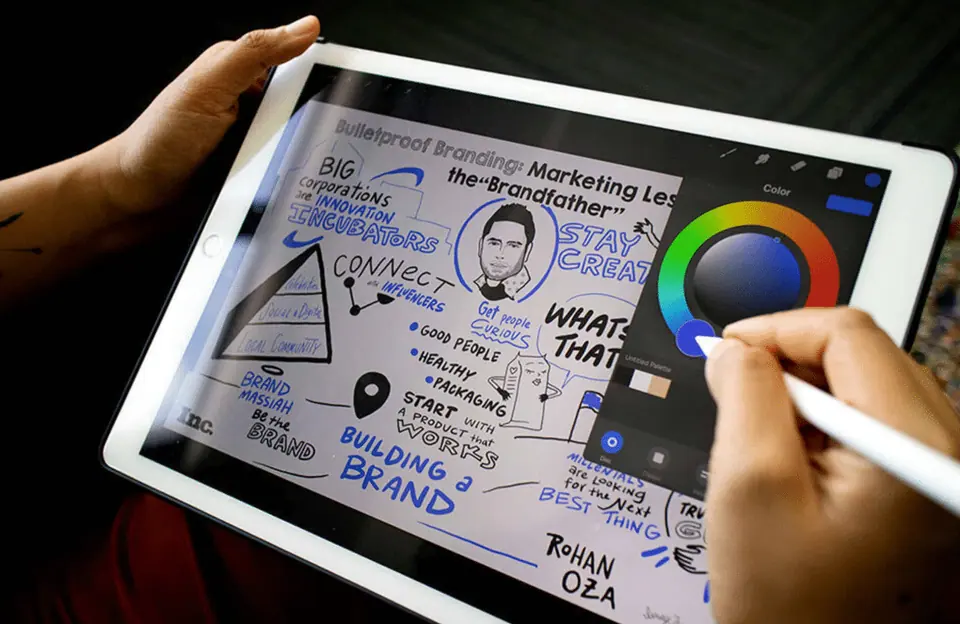
What our graphic recorders do, whether live on site, or here in the studio, is to create engaging, fun, and deceptively simple visual mnemonics to aid with the memorization and communication of big ideas. For more on why this works, see the science behind live scribing.
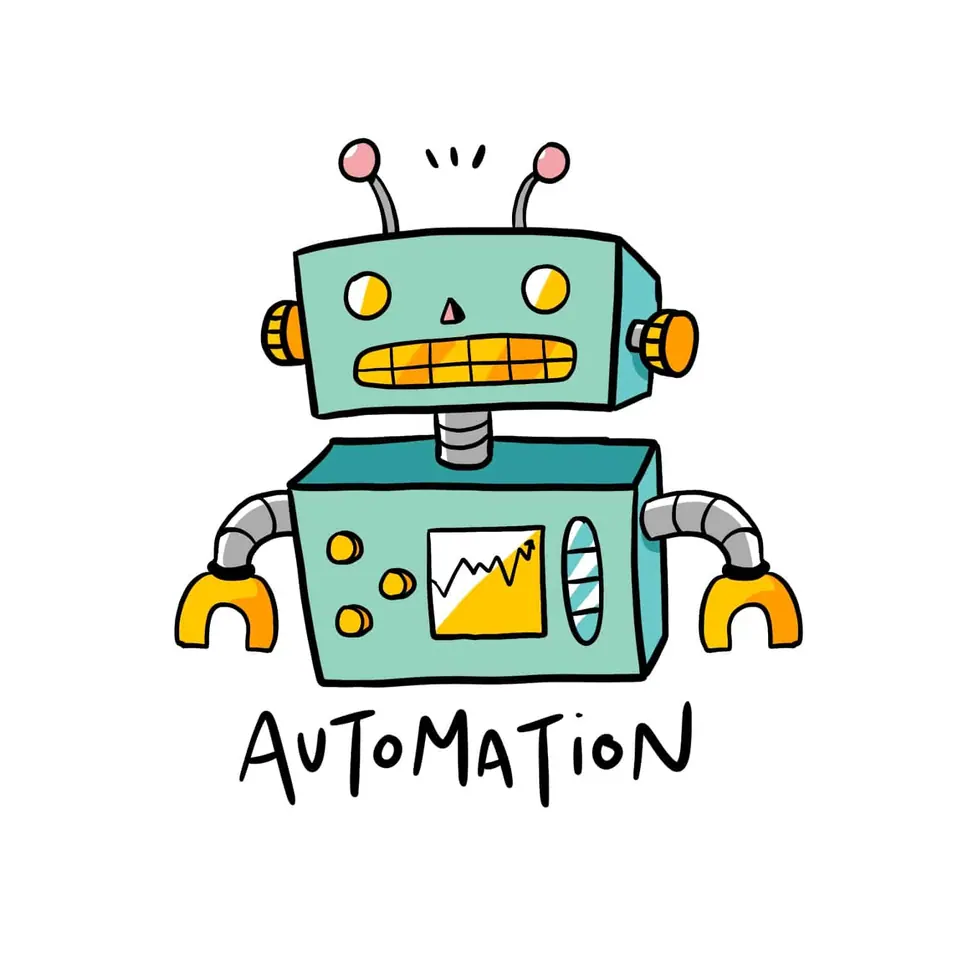
For instance, one of our favorite icons to use is this fun guy, a boisterous and boxy robot who represents the concept of automation. Audiences remember the fun character, and associate it with the point of the presentation, and those presenting have a useful, visual bookmark in their narrative.
Short-term memory holds only a limited number of items at once, which is why grouping and visual association help us retain and recall more. That packaging of data in the short-term, can in turn, assist with the creation of long-term memories.
All this is to say, whether you want to write limericks, sing a song, or make up fun acronyms, mnemonic devices are a powerful tool to engage and potentially entertain yourself and your intended audience. For us, pictures work best. If you’ve got a big idea (or New Year’s Resolution) and would love a way to see them a little more clearly, Start a visual strategy conversation or schedule a conversation with one of our account managers today.
Frequently Asked Questions About Visual Mnemonic Devices
What is an example of a mnemonic device?
ROY G BIV is a classic example. It turns the first letters of red, orange, yellow, green, blue, indigo and violet into a single pronounceable name, so the order of the rainbow becomes one word instead of seven. Other familiar examples include PEMDAS for the order of operations and the rhyme “Thirty days hath September” for the length of each month.
What are the three main types of mnemonics?
Most mnemonics fall into three families. Visual mnemonics pair an idea with an image. Verbal mnemonics use letters, words or sound, which covers acronyms, acrostics and rhymes. Organizational mnemonics restructure information, which covers chunking and the method of loci. Many everyday memory aids blend two of the three.
What are the 9 mnemonics?
The nine most commonly taught mnemonic types are visual or imagery mnemonics, acronyms, acrostics, rhymes, songs and musical mnemonics, chunking, the method of loci or memory palace, the peg system, and keyword mnemonics. There is no single official list, so the count varies between teaching sources.
What is the most common mnemonic device?
Acronyms are the most widely used, because they compress a list into one word that is easy to say and hard to forget. ROY G BIV, PEMDAS and HOMES for the Great Lakes are all acronyms. Visual mnemonics are the most durable, though, since the brain retrieves images faster than strings of letters.
What are good mnemonic devices for studying?
Match the device to the material. Use acronyms for ordered lists, rhymes for dates and rules, chunking for numbers and long strings, and the method of loci for sequences you must recall in order. For concepts rather than facts, sketch a simple image next to the note. A rough drawing works as well as a polished one.
What is the method of loci or memory palace?
The method of loci links each piece of information to a place in an imagined space, such as rooms in a building you know well. To recall the information you mentally walk the route and collect each item in order. It dates to ancient Greece and Rome and remains one of the most reliable techniques for ordered recall.
Why do visual mnemonics work better than words?
Pairing an idea with a picture encodes it twice, once as a word and once as an image, so memory has two routes back to it instead of one. A single clear icon can also stand in for a paragraph of explanation, which lightens the load on short-term memory and makes the idea easier to hold, retrieve and explain to someone else.
How do I create my own mnemonic device?
Start with the idea you need to remember, then attach it to something vivid. Turn a list into a word, set a rule to a rhyme, or sketch a simple picture beside the note. The more distinct, playful or exaggerated the association, the easier it is to retrieve. You do not need to draw well for a visual mnemonic to work.
PS. If you need a way to remember us, just remind yourself that ImageThink Visual Strategists are wizards with markers, or MAGES of the INK. [i]MAGE[th]INK.